
Flower Forest Level 70 Answer
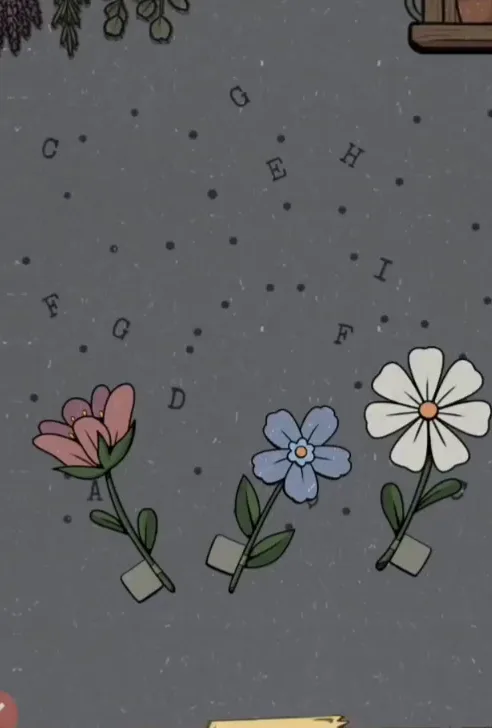
For the flowers covering a printed sheet in Flower Forest level 70, use G, A, I, E as the answer and move the blooms aside to uncover the clue. Inspect the four-line inscription beneath them, then enter the letters in that sequence and press the flower button.

Aged paper with large black printing lies under a spread of colorful flowers. A red rose and an orange-red poppy sit near a yellow sunflower, with a white daisy and lily across the middle and right. Purple blooms and a pink flower cover the upper area, while an orange chrysanthemum and a pink tulip overlap the lower edge. Only parts of the printed lines remain visible between the petals.
Clear the Printed Sheet
Look at the black print peeking through the gaps to locate the covered message. Move the flowers away from that writing until you can inspect all four lines together.
- Drag the flower heads aside to expose the paper beneath the pile.
- Clear the covered areas of the four printed lines, checking for any petals still across the text.
- Study the revealed inscription while keeping the answer sequence G, A, I, E in mind.
- Choose G, A, I, E on the grid, then press its flower button.
The large blooms overlap different parts of the same sheet, so moving one can leave much of the message hidden. Follow the printed line across the page to see where another flower still interrupts it. Clear that area next instead of assuming the first visible word gives the complete clue. The aim is to expose the inscription as a whole, with the four lines available for comparison.
Keep the flowers away from places you have already opened up. A bloom moved onto another line can hide useful printing again, even though you have made progress elsewhere. Use the visible paper around the message as a guide for where to put the pile. Once the writing is clear, pause the dragging and give your attention to the printed sheet rather than the flowers around it.
Video: level 70 flowers over an inscription from start to finish
Compare the flower-covered sheet with your own screen as you follow the walkthrough. Use the clip to check the letter entry and the final flower beneath its glass dome.

Inspect All Four Lines
The inscription is the clue to the required G, A, I, E order. Keep all four lines in view when studying it, since a partly covered message encourages guesses based on isolated bits of print. Flower names and petal colors identify the objects you can move, but they are not a replacement for the writing underneath. The useful change is the amount of text you can see after clearing the sheet.
When entering the solution, distinguish the printed page from the nine choices on the parchment. Your entry contains four letters, with G beginning the sequence and E ending it. A comes second and I third. You do not have to reproduce every visible character of the larger inscription on the grid. Use the four-letter answer and leave the rest of the parchment letters alone before confirming with the flower.
Uncover, Then Inspect
The colorful flowers are much easier to notice than the black writing behind them. That can make the scene look like a flower-identification puzzle and send you toward matching colors or naming species. Notice that the paper already contains a message with gaps where the blooms sit. Dragging the flowers is how you gain access to that message, so begin there.
Another problem is reading too early while a few petals still cover part of a line. A visible fragment can look complete when its missing end is hidden under a neighboring flower. Trace the four lines from one side of the paper to the other before deciding you are done clearing. Afterward, keep I ahead of E when transferring the four-letter answer.
Frequently Asked Questions
What is the answer for Flower Forest level 70?
G, A, I, E is the solution for the printed sheet covered by flowers. Move the blooms aside so you can inspect the four-line inscription beneath them. Then enter that four-letter sequence on the parchment and use the flower control, with G as your first choice and E as the last.
Can I move the flowers covering the paper?
Yes, drag the flowers aside to uncover the printed message. The sunflower, rose and other blooms overlap the writing, so clearing one area can reveal only part of a line. Continue until the remaining flowers no longer cover the four lines, then inspect the inscription rather than the newly arranged pile.
Where is the clue hidden in this flower scene?
The clue is the inscription on the sheet beneath the flowers. Black printed fragments are already visible through the gaps, showing where to start clearing. Follow those lines across the paper as you drag the blooms away, and check that a neighboring petal has not covered a part you previously exposed.
Do I use the colors or names of the flowers?
Use the writing beneath the flowers for this puzzle. The different colors and species make the covering objects easy to tell apart, but the clue you need to reveal is printed on the paper. Keep the four-part answer G, A, I, E separate from any attempt to sort the blooms into groups.
Where can I request help if the inscription stays confusing?
A picture hint is available through the hint control beside the letter grid after an ad. First move the flowers so the printed sheet is open, then compare the hint with the inscription. For entering the answer, remember the middle pair A followed by I before you finish with E.
Read next


The letter order for every level is in one table on the Flower Forest answers for all levels page. Official store links are on the download page.